We first spot the garden of Hampton Court from the window of one of its grand staterooms. It beckons us. We’ve already passed through Henry VIII’s Great Hall lined with fading floor-to-ceiling tapestries, site of great dinners where plenty of wine was poured and the gossip of the day flowed. With six wives, there would have been plenty of gossip. The pride of the palace were its privies, aka toilets, in each guest apartment and conveniently located throughout. An internal toilet meant the height of luxury in those days. Portraits tell the tale of Henry’s many marriages in the quest for a male heir, while a stunning chapel with gilded ceilings and a balcony for the royals to kneel on plush red pillows reveals Henry’s devoutness despite his break with Rome. We visit the kitchen, which really is more like several houses–one room dedicated to pies, another to bread and yet another devoted to the roasting of meat. Much of the palace appeared to be dark and at other times light shown through in the most unexpected places.


 It is too gorgeous outside to be closed in with ancient relics, so we answer the garden’s call. We stand for a moment to take it all in –the trees are the most whimsical shape, like gum drop trees, and the bushes are shaped like Hershey’s Kisses. With the colorful patches of flowers, it looks like we’ve stepped into Candy Land. It would be the perfect place for a garden party. The grass is so soft and lush under foot that you want to drop to your knees and lie down for a while. Some folks have succumbed to the urge and lay prone staring up at billowy white clouds. The setting inspires a photo shoot and Ugo and I snap shots of one another under trees, next to multicolored flowerbeds and near classical sculptures. When we think we have enough shots worthy of Vogue or Harper’s Bazaar, we walk into town for tea and cake.


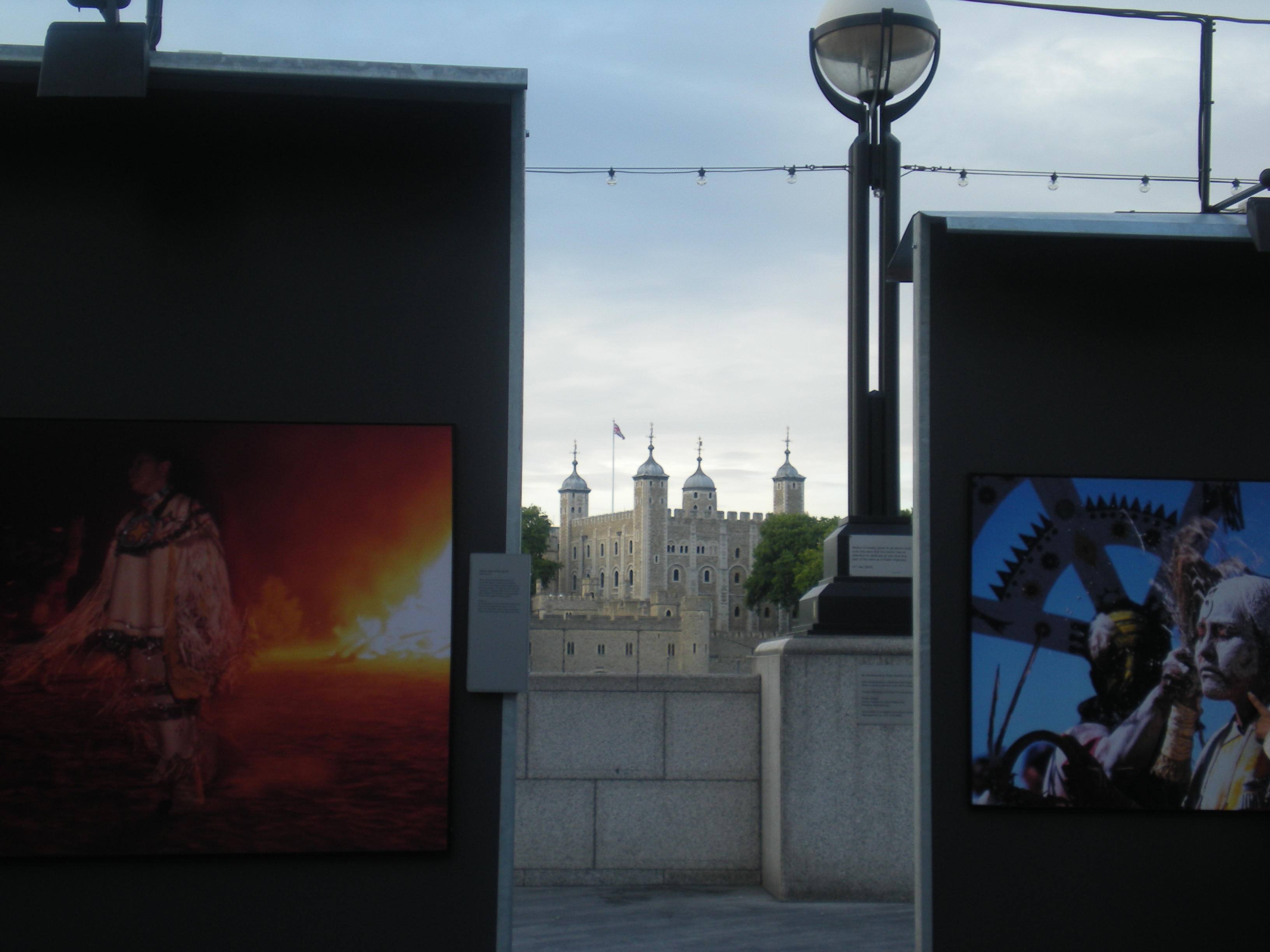
After a quintessential British day in the country, we return to the city to the London Bridge area. Standing on London Bridge, you think you could be standing on any random urban bridge in the States. Only the very modern sign on the bridge tells you that you are standing on the famed bridge from the schoolyard song. Beyond the London Bridge is the Tower Bridge, looking more like a postcard for the city. I want to check out the Burough Market, which is nearby, but we’ve just missed it and see merchants packing up their wares and cleaning their stalls. I can only image what it would have been like with bustling crowds. So, we circle back to the London Bridge to walk along the Queen’s Walk, a scenic promenade along the South Bank of the Thames that stretches between the Lambeth Bridge and the Tower Bridge. There’s lots of activity along the walk on a Friday evening as Brits gather at pubs facing the Thames. Couples stroll hand in hand and tourists pose for pics in front of the Tower Bridge. As we walk, the crowd starts to thicken and we start to hear music playing. It sounds like a Michael Jackson song, so I am immediately drawn towards the bumping bass. But Ugo calls out and asks if I’m seeing what’s around me. We are standing in the middle of a photography exhibit. The photos depict life rituals from around the world—weddings, funerals, births, even circumcision. A woman in Palau breast feeds her newborn baby in one photo; in another a man in Ethiopia leaps naked over bulls to prove that he is a worthy husband to his soon-to-be bride; and in yet another a Turkish family looks on as their young, festively-dressed, son bravely withstands a circumcision. It’s provocative and truly illustrates its point, which is that we are more alike than different.


 I can tell this fact is true as we turn our attention to the pool of dancing Brits just beyond the exhibit. They’ve been captivated by the music we heard earlier too. It’s a free open air concert at the Scoop at MoreLondon, a sunken concrete concert space in front of London’s City Hall. It reminds me of how DC’s hip crowd fills each corner of the Hirshorn’s Sculpture Garden for its Friday night concert series. At the Scoop some have brought their own libations, coolers packed with wine bottles. An older white gentleman in a fedora and shiny gray suit moves effortlessly to the beat, while not far off a rhythmless black Brit bounces off beat. A couple down below show-off their near perfect salsa moves to the pop tunes. It is a diverse crowd blowing off steam after a long week. The band goes through Michael Jackson’s song book hitting much of the “Off the Wall” and “Thriller” albums, before moving on to popular Duffy and Rhianna songs. Finally, the lead singer encourages the crowd to get to know each other like a preacher encouraging his parishioners to give praise and hug and greet each other during a church service. I introduce myself to a black British woman sitting in front of us. Her name is Anne-Marie. She asks about my accent and I tell her I’m from America and she tells us that there are concerts at the scoop during lunch and in the evenings. The band we are listening to are a popular group called the All-Stars. We talk about music a bit. They mention music that I don’t know and I tell them that they should check out Raphael Saadiq at Camden Town on Sunday. The band swings in to a popular British song that we don’t know, but it calls for audience participation with the refrain, “It’s all about the music.” It certainly is as Ugo and I join our musically entranced brethren in dance.


After we’ve enjoyed the musical stylings of the All-Stars, we continue down the Queen’s Walk to Shad Thames, a narrow cobblestone street with its buildings connected by iron bridges and walkways. This is how the warehouse district looked in Victorian times where workers moved cargo like teas, spices and other commodities from boats and from warehouse to warehouse over the iron bridges inland to their destinations. It’s a wonderful place to take a photo, especially in the fading London light. From there we head to Bermondsey Street, which Ugo says is known for its good, off the beaten track restaurants. Except that when we get there, almost every place is packed. We walk up and down the street exploring the menus and we stop at Village East with a menu with a great range of dishes with chicken, fish, pork and beef, but sadly, they are no longer accepting diners in the restaurant and we are forced to sit in the bar area to have a burger. The hostess has however assured us that the burgers are good, even though I’ve heard on several occasions that Brits don’t know how to do a good burger. We take her word for it and give it a try. It turns out she was right. It was a perfect rare on focacia with watercress and a creamy white cheddar cheese. The fries, or chips as they call them, were pretty good too. Another great end to a great day in LondonTown.