We started driving down an unmarked wooded path where the trees appeared to be closing in on us. Annelise asks if we are getting scared. I say “No” and encourage her to keep going. Finally, she stops at a place where the road seems too narrow to pass and we get out. There are stacks of chopped wood, a sign that someone has been clearing a path for us and other future visitors to this place. It is very quiet. We don’t even hear a bird cry or flap it its wings, only our own footsteps along a muddy path. There is no one living here currently, but we soon see evidence that someone lived here a very long time ago, maybe over 5,000 years ago, we’d later learn. To our right, we approach a mound of precisely arranged boulders with a pathway between them. Annelise suggests that it could be the grave of a village leader. We pick up sharp pieces of flint scattered around the site and understand why this was a good material for making axes and other sharp tools. The people who used them may have been Denmark’s earliest settlers who came to hunt reindeer–the same ones so well-preserved at the National Museum in Copenhagen.


 Annelise says there is more to see as we move deeper into the woods. In the next clearing we see a circle of large rocks, maybe 4-feet-tall each, with several in its center and one stacked on top, reminiscent of Stonehenge. We venture farther to see a massive mound covered in grass and wild flowers with a small doorway, another burial site, across from a number of large boulders seemingly strewn about, possibly a mass grave. We’d been following a string of trees marked by yellow spots and we saw more ahead. Annelise excitedly asks if we should go further and we say why not? Traipsing through more mud and past tall grass and weeds, we continue to follow the dots in search of more ancient archeological finds. But the rains from earlier in the week make our path impassable and we have to be satisfied with the day’s archeological investigation.


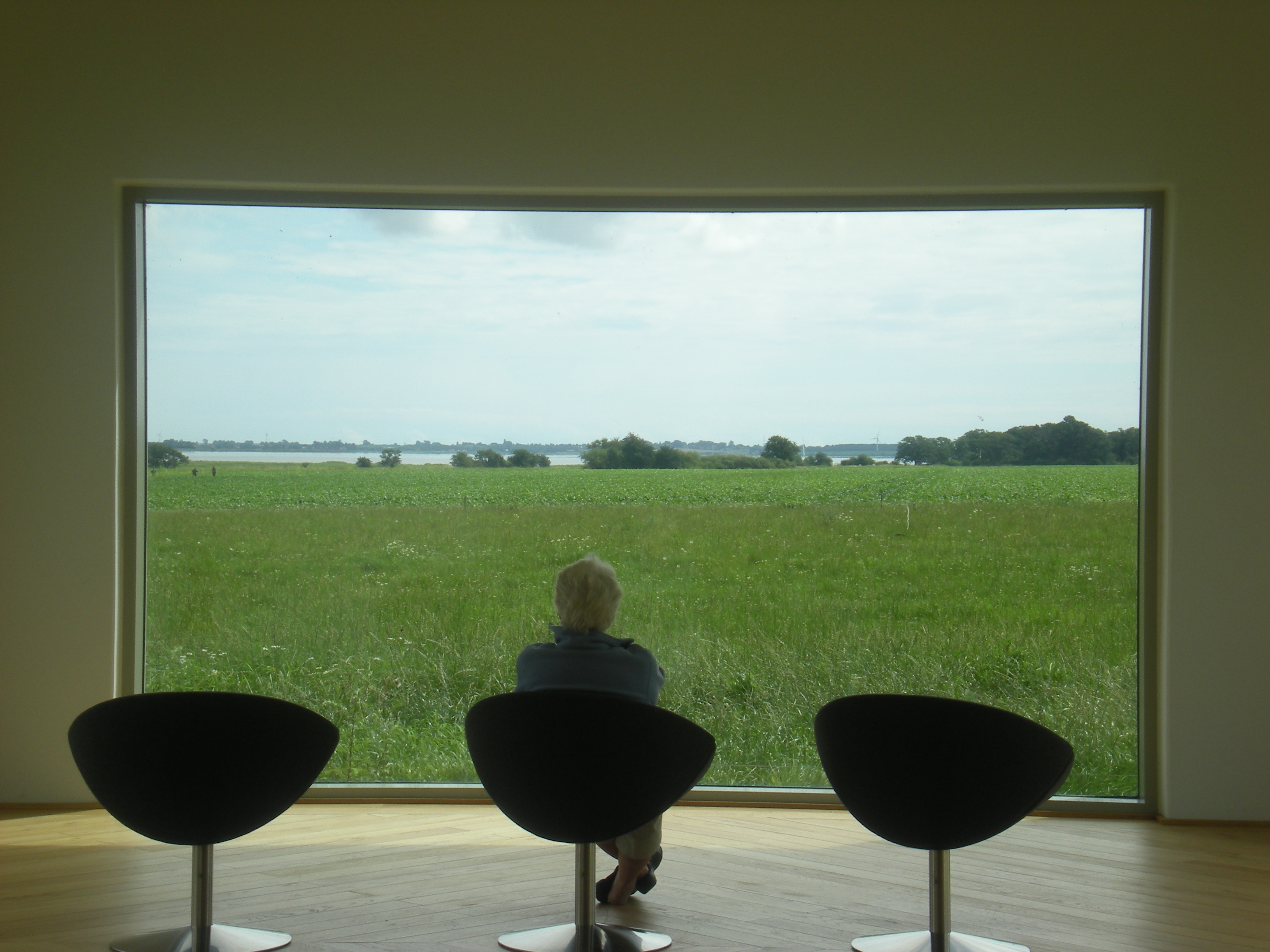
We have driven to Falster’s sister island of Lolland just to see where Denmark’s past is still buried. But we’ve also seen one of the island’s newest sites the Fuglsang Modern Museum. Only a few years old, the beautiful airy exhibition space features works from Danish artists, particularly the Cobra (Copenhagen, Brussels, Amsterdam) collective of artists inspired my Picasso and other modern and cubist artists of their day. Aaron, Annelise and I walked around and picked our favorites of the pieces on display. We seemed to have similar tastes with the most vibrant paintings winning our favor. The most impressive feature of the building though was the very simple picture window and the back of the building that looked out onto Lolland farmland.


Lolland, Falster and the rest of Denmark, for that matter, is pretty flat. We get a real sense of this on our drive past wheat, rye and sugar beet fields, dotted with windmill farms. Each appears to be a staple for Denmark, with wheat and rye bread as a major part of the Danish diet and sugar beets to be processed into sugar and the windmills generating green energy. Along the way, Annelise shares more stories of Lolland’s past, telling us the story of farmers who rebelled against a tax-raising nobleman. The official brokered a deal with the fed-up farmers and said they only had to give him 12 white cows in exchange for lower taxes. The problem was they only had 11. But they did have a white cow with one brown ear which they painted white. The farmers are now seen as local heroes and there is a carved stone honoring their unusual rebellion.
 The fishing town of Nysted on the coast of Lolland was quite quaint with the area’s signature red-tiled roofs and colorfully painted homes. We stop here for a quick lunch at the seaside restaurant Rogeriet with sailboats and Baltic-swimming swans and its backdrop. Aaron and I order traditionally Danish dishes of herring and salmon on warm toast with Jacobsen Brown Ales while Annelise goes more American with a massive club sandwich. Sometimes Annelise prefers more American things over Danish ones, but she is very proud of her heritage and has been happy to share it with us, telling us about growing up on Falster with three other siblings during World War II. She was in her 20s when she left her banking job in Nykobing to move to the United States where she knew only one person in Washington, DC. Since that courageous leap of faith, she calls it ignorance, she has built a lovely life in America with three children and four grandchildren that get to visit her home country every summer. I think it is the perfect example of the American dream.


After a full afternoon exploring Lolland, we head back to Falster and Marielyst, where Aaron and I decide to walk to see more of the beach town. He was in search of touristy trinkets to take back to his colleagues at work and we stopped into several stores along the way. One seemed particularly promising, Ting & Kram, literally translated as Things and Junk. It was true to its name and was crammed with anything you may have forgotten while on vacation or anything you needed to fulfill any sort of junk craving. We saw everything but touristy junk, things like grill brushes, crayons, tea, duck tape, girl’s barrettes, book bags and then Aaron stood still in his tracks and asked if I saw what he saw. I look across the store to where he is looking and I see a few feather boas hanging against the wall. Odd, but not so odd in this place. I scan a bit further and spot the vibrating dildos, next to lacy underthings and upon closer investigation, whips and butt plugs. Truly a one-stop shopping kind of place. We wondered if many Danes came on vacation and realized they’d forgotten their dildo at home. Needless to say, we found it extremely humorous and continued to crack jokes about hardcore sex toys conveniently located next to household products and children’s toys as we shopped. Marielyst also appears to be a gambling town with a place called Little Vegas boasting several slot machines and we saw several in other convenience stores along the way.